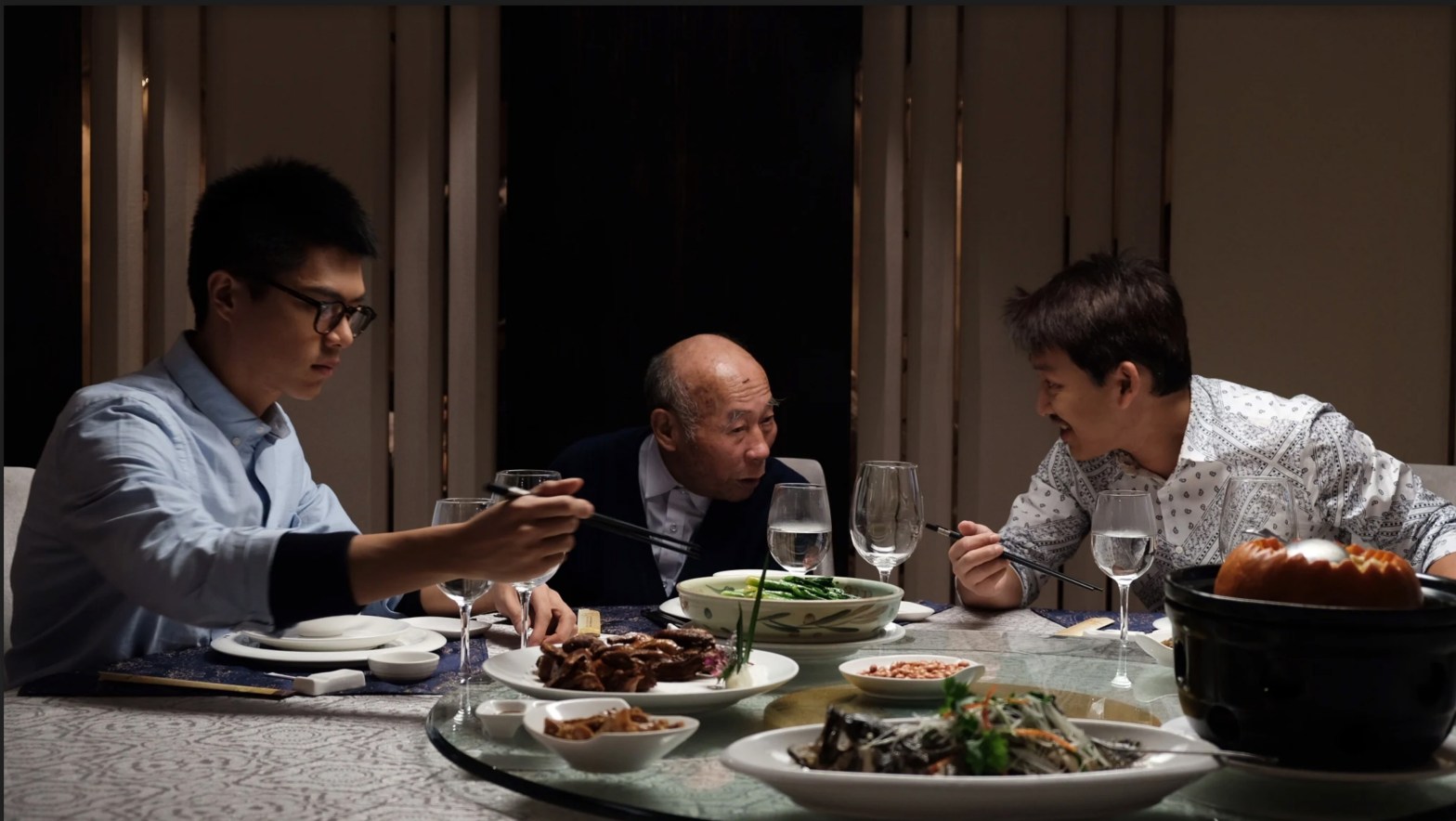
Hong Kong students reflect on the state of their city through film.
In the last few years social unrest and public disorder have engulfed the city of Hong Kong, much of the news cropping up in Britain alluding to a notion that the entirety of the region is fervently anti-China. This allusion, however, is false. The ever-polarising political debates occupying Hong Kong have been stirring up generational tensions within family units too: the young yearning for a democratic autonomous state, and the older seeking authoritarian stability from the Chinese central government (for an extreme example).
It is of course, not a binary conflict, and there will be many in the region who see positives and negatives from each system. This is reflected on in a series of films made by students from Hong Kong Baptist University. They are not only commenting on the socio-political tensions present, but subtly offering up solutions also. Whether these are grounded or naïve is up for debate, a willingness to compromise is still hopeful.
Conflict & compromise
Ian Lui Yee Pan’s film “The HongKongers” (2019) is a family drama that follows the relationship of student, Lok, and his grandfather. The two characters are at each end of the political spectrum, their differences having amounted to create tensions in their relationship. They are forced to collaborate, however, when the grandfather’s ancestral home on the mainland is at risk of demolition.
Initially, Lok is at odds with the prospect of a trip out of Hong Kong. His ambivalence suggests a general disconnection between the city’s young with mainland China. This surfaces later on in the film when, during the trip, his grandpa goes missing. Lok frantically asks locals if they have seen a small elderly man, but his Cantonese proves to be of little use in a Mandarin speaking territory.
On the other hand, the grandfather’s disconnection with the younger generation is illustrated by his grievances with America and the pro-independent politicians of Hong Kong. Furthermore, his obstinate devotion to heritage, ancestry and tradition alienates him from his family (ironically) and the rest of the world around him.
Food waste is another great sin in grandpa’s eyes. In context, an estimated 35 million tonnes of food are wasted annually in China (6% of the country’s entire food production). For those that lived through the Cultural Revolution, throwing away any form of sustenance must seem abhorrent. That is also the reason why China has introduced a new policy to remedy this crisis with the announcement of the ‘Clean Plate’ scheme.
The generational conflict in the film reflects heavily on socio-political rifts currently dividing families in Hong Kong. In a social study led by Dr. Lau Hi Po Bobo, a professor at Hong Kong Shan Yue University, parents and children were interviewed about politics, the protests and the possibility of migrating out of the city. Many of the older folks confessed to thinking about moving to the mainland, as it appears now to offer a more stable and peaceful life than which they have in Hong Kong.
For the Hong Kong youth, migrating to a more “typically democratic” nation has proved to be a tempting alternative. However, for those who want to move to the UK and are not eligible to BNO status (those born after 1997), the process requires the parents to commit to migrating to Britain also. Taiwan is another haven for exiled/fleeing Hong Kongers. The study has illuminated how local Hong Kong politics has driven the city’s families into feuding over the region’s future, and their place within it. With this in mind, what then, does the work of a Hong Kong film student have to offer?
It is evident that by the end of the trip, both Lok and his grandfather have had to make sacrifices. As a result, their relationship is more harmonious, each having a greater understanding of the importance of making concessions. Contemplating the themes of polarity, change and acceptance in “The HongKongers”, Ian Lui may have a message for those families in his city suffering from generational disparities. This short is a powerful demonstration of how shared experiences can illuminate the importance of compromise.
A complicated relationship, to say it simply
Packed with metaphors, both student animations released for the cinema season exemplify themes that reflect on Hong Kong’s relationship with China. In “Chop Chop” (2019) by Tsang Yuk Lui, we observe the morning routine of a mother and daughter. So tightly is the girl’s hair braided, that her scalp is left sore and uncomfortable. This procedure is seen by the mother as a gesture of intimacy and tradition, but the child is left confused and wondering why she cannot do what makes her happy.
Viewing the mother-child relationship as the embodiment of Hong Kong’s with China, we are given an insider’s perspective on the connection between the two. It paints a picture of China as an overbearing mother rather than a foreign invader.
This is something we, in the West, must remind ourselves; that while Hong Kong and its people are different from the mainland in many ways, they also share much of the same history and hold many of the same cultural beliefs. Their identities are inextricably linked. This analogy is not intended to play down the plight of the democratic Hong Kong protestors. What it does is simply offer a different way of perceiving the relationship between the city with mainland China.
With the National Security Law (2020) in full effect, the people of Hong Kong are learning creative ways in which to comment on China. With subjectivity standing as a protective buffer, these students have used fictitious narratives to share their thoughts on current affairs.
The films commented on are two of four available to watch for free at chinesefilm.uk as part of the ongoing Chinese Cinema Season in the U.K. They feature as part of the programme “Hong Kong, Reimagined”. It was designed to better the audiences’ understanding of the region.
In the words of the creator of the programme:
This curated programme will reintroduce Hong Kong to you. “Hong Kong” was never a fixed identity but a constant negotiation between different belongings. The relation between old and new immigrants (Chinese and non-Chinese) to Hong Kong has been a common subject in films. Such mobility also contributed to some extraordinary creativity. Hong Kong cinema is not always about Hong Kong. The region’s uniqueness has also inspired filmmakers to travel, to rediscover how Hong Kong has in fact been a crucial hub for connecting Chinese culture with the world.
 Film Dialectic