The journey of Hong Kong, the stories of its people and the space for re-imagination.
In the past few years, Hong Kong Special Administrative Region has appeared frequently in the British news. Despite its unique history with the UK, most British people’s knowledge of Hong Kong is fragmentary. This is why the programme “Hong Kong, Reimagined” was curated, as a gesture in a hope to facilitate a more diverse public debate.
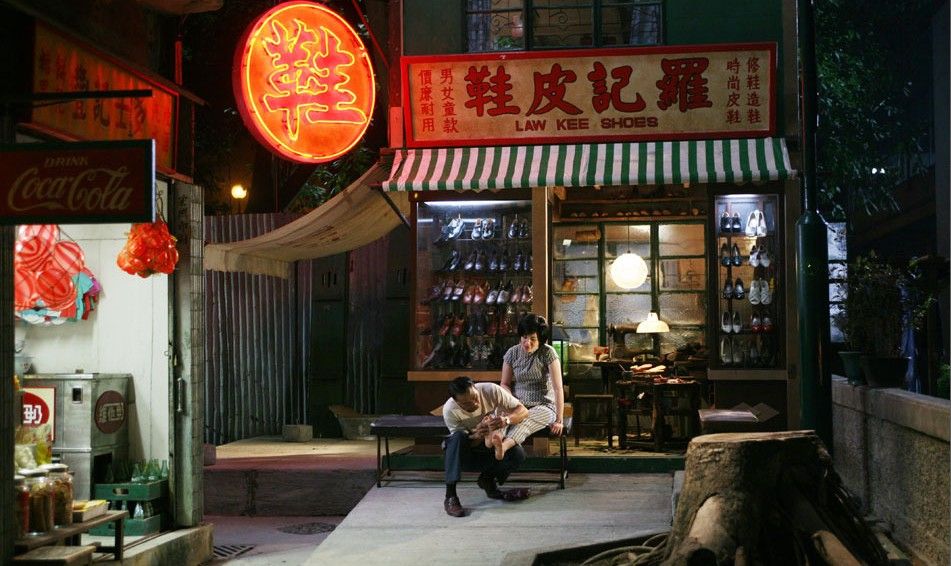
Directed by Alex Law and produced by his life-time creative and romantic partner Mable Cheung, multi-award-winning film “Echoes of the Rainbow” (2010) is an autobiographical family drama which will warm your heart. As Alex revealed in the Q&A event, “1960 was such an exciting period – everything was happening!”. To paraphrase, as a child growing up in the 1960s (politics, music, the explosion of popular culture and the space race, just to name a few), it was an extraordinary experience for Alex.
In addition to the wider political context, social issues also started to become more visible during this period. A lack of space for schooling, housing issues, inequality between the rich and the poor and a new wave of immigrants arriving in Hong Kong. All these changes are seen through the eyes of our protagonist, “Big Ears”, an energetic little boy. The world is changing, so as his family, as “Big Ears” plays around after school and discovers treasures from store to store.
There is a brief detail in the film, however, which hasn’t been picked up by critics or reviews yet. This detail reveals the history of British police corruption in Hong Kong during the 1960s. In the film, a British police officer visits Mr Law (father of “Big Ears”)’s shoe shop regularly. He is not visiting to have his shoes fixed; in fact, he is visiting to collect “protection fee”. This coercive and brutish type of transaction was very common in Hong Kong up until the 1970s. The police force, dominantly British at that time, was largely corrupt. Due to their lowly status and lack of representation, Mr Law and his family are targeted by this British policeman, who insists on collecting “protection fee” so that he can “look after” the family business. Mr Law doesn’t have a choice, because the housing arrangement for his store/home and his neighbourhood is not yet legalised. This is a back street that has not caught the attention of the local council nor property developers.
The topic of British police corruption in Hong Kong is very well researched and recorded, many articles and resources can be found online. The Foreign, Commonwealth and Development Office (FCO) has even publicised some of their official documents, currently held at the National Archives in Richmond, London. This problem also frequently appeared in Hong Kong films, being used as a detail to paint a cultural and societal context in different stories. In Echoes of the Rainbow, Alex Law portraits the problem of corruption in such a heartfelt way, via our little protagonist.
“Big Ears” is innocently intrigued by this British policeman’s frequent visits and, of course, he has no clue of the injustice committed to his father and family at the hands of this bully. While waiting for Mr Law to hand him the money, the policeman tricks “Big Ears” to memorise the alphabet backwards. He tells “Big Ears”, that his english will be no good until he can memorise the alphabet backwards. Of course, “Big Ears” takes it very seriously, he keeps practicing and one day, he can finally do it. When “Big Ears” demonstrates his success to the British policeman, the only thing the policeman cares about is the collection of an increased “protection fee” from Mr Law.
How was the problem of British police corruption resolved in Hong Kong? I will leave this to those who are intrigued enough to do their own research.
How can one (MPs and journalists alike) debate about Hong Kong fairly without knowing their own history?
Echoes of the Rainbow made a rare appearance in the “Hong Kong, Reimagined” section in April 2021, as part of the Chinese Cinema Season.
Dr. Hiu Man Chan is a lecturer in Creative & Cultural Industries at De Montfort University. She is also the founder of UK-China Film Collab.
 Film Dialectic